




Please note that this degree is now closed for 2026 entry.
Key information
Duration: 1 year full time or 2 years part time
Institution code: R72
Campus: Egham
UK fees*: £12,000
International/EU fees**: £24,500
The course
Sustainability and Management (MSc)
The global pursuit of progress has led to widespread industrialisation, overpopulation, resource depletion, pollution and other threats to our planet. Through the research and teaching of environmental and social sustainability we aim to preserve our world and its resources for future generations.
Study Sustainability and Management at Royal Holloway, University of London and you’ll develop the skills to communicate with experts across a variety of backgrounds, helping you to become an expert in sustainability and an attractive prospect for business, governmental agencies and NGOs.
The MSc Sustainability and Management is taught jointly by the Department of Geography, which is recognised for expertise in the research and teaching of environmental and social sustainability and the School of Management, which has a long tradition of research into sustainable businesses and corporate social responsibility.
Follow your passion for Sustainability and Management at Royal Holloway and you’ll graduate with an interdisciplinary Masters degree offering excellent employability prospects, and be well equipped with the skills and knowledge you need to tackle some of today's most pressing sustainability issues.
From time to time, we make changes to our courses to improve the student and learning experience. If we make a significant change to your chosen course, we’ll let you know as soon as possible.
Course structure
Core Modules
Term One
-
In this module you will develop an understanding of the key social and environmental relationships, incorporating contemporary issues in the geographies of sustainability. You will look at the concept of 'risk society', sustainable cities, and the impacts of corporate sector activities on the environment. You will consider the challenges to sustainable development at household and community levels, with a focus on community-based approaches to sustainable development.
-
In this module you will develop an understanding of research methods used for exploring the social sciences. You will look at the key methods used by social scientists, with teaching delivered by those who have practical experience in their field. You will look at the research process and explore research beyond the field, becoming familiar with the practical considerations of a range of methods, their benefits and challenges, their epistemological basis, and their ethics.
-
This module will describe the key principles of academic integrity, focusing on university assignments. Plagiarism, collusion and commissioning will be described as activities that undermine academic integrity, and the possible consequences of engaging in such activities will be described. Activities, with feedback, will provide you with opportunities to reflect and develop your understanding of academic integrity principles.
Term Two
-
The module aims to introduce students to how their human geography learning is relevant beyond the academy in an applied setting (e.g. business, charity etc.) It does so through an introductory seminar that lays the groundwork for each student to undertake a placement with one of a number of external institutions across London or further afield if needed (organised both by staff and students). They are required to spend a minimum of 20 hours working with the organisation of their choice. They will be allocated a member of staff as an academic tutor to help support their experience and learning.
-
In this module you will develop an understanding of the role of business in modern society from an ethical perspective. You will look at different types of business, including publicly traded multinationals, small and medium-sized enterprises, social enterprises and family firms. You will examine the issues in these organisational types and articulate moral arguments from a range of perspectives, critiquing alternative models of business, including social entrepreneurship, fair trade and microfinance.
Term Three
-
You will carry out an extended project on a topic of your choice, producing a written report of between 12,000 and 15,000 words. Working with your supervisor, you will carry out primary and secondary research, using theoretical and practical methods to tackle your research question. You will carry out your dissertation in collaboration with an organisation in the field of development and the environment.
Optional Modules
Below is a taster of some of the exciting optional modules that students on the course could choose from during this academic year. Please be aware these do change over time, and optional modules may be withdrawn or new ones added.
Term One
-
In this module you will develop an understanding of how international strategy and entrepreneurship fit into the organisation and running of a commercial entity. You will look at the ways in which a firm can achieve sustainable competitive advantage through strategy and entrepreneurship, evaluating the processes that firms use to develop, renew and reconfigure these. You will also examine the theoretical frameworks of strategy and entrepreneurship in the real business world.
Term Two
-
This module aims to address some of the potential issues this world faces from a cutting edge geographical perspective. These topics include climate change, political division, and technological revolutions. The module is split into sessions, titled Earth Futures, Secure Futures, Just Futures, and Creative Futures.
Teaching & assessment
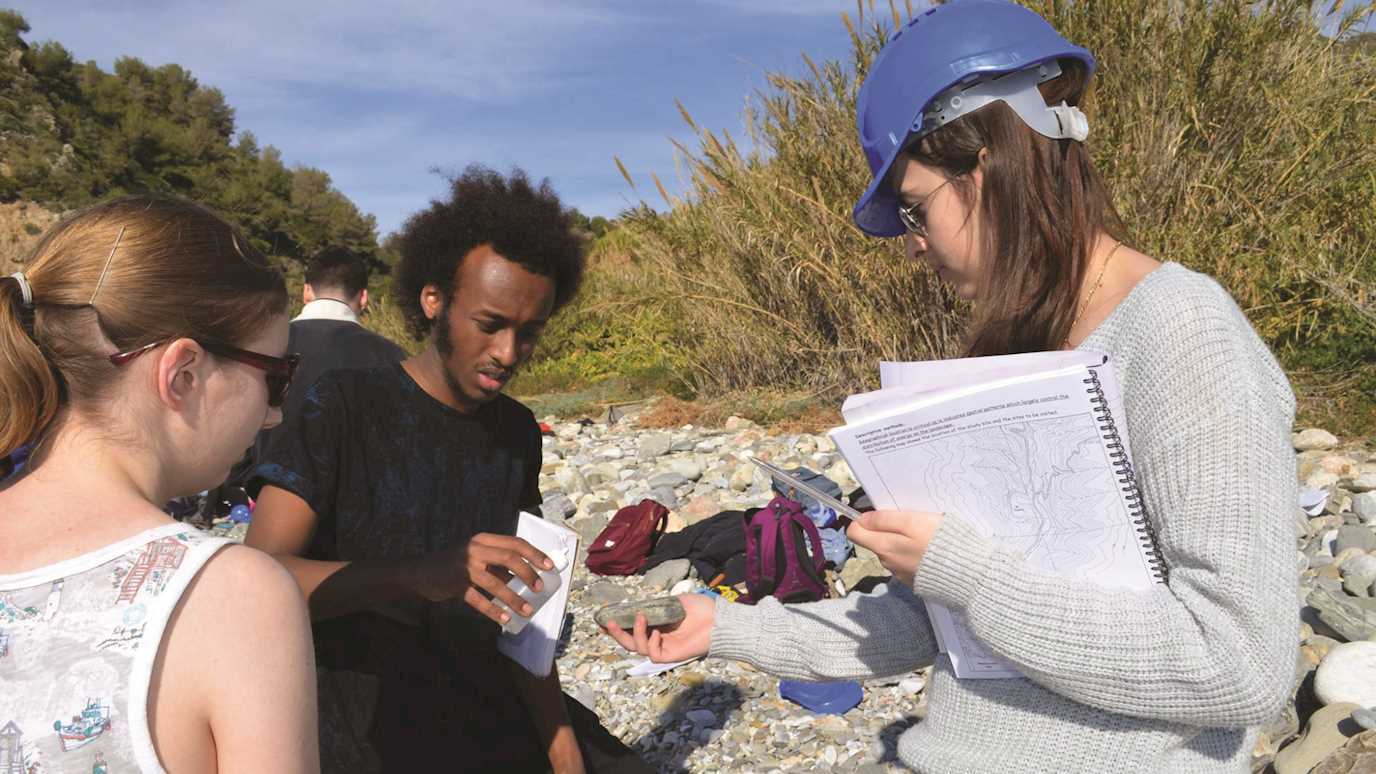
You will benefit from innovative teaching including real-life case studies, seminars with practitioners, field work and volunteering.
Assessment is carried out by a variety of methods including coursework, examinations and a dissertation.
Entry requirements
2:2
Business studies, Ecology, Environmental science, Environmental studies, Geography, Geology, Management studies, or Social studies.
Candidates with professional qualifications or relevant professional experience in an associated area will also be considered but will be required to demonstrate proficiency in theoretical aspects of the subject.
International & EU requirements
Bachelors Degree/ Bachelor Honours Degree: GPA 2.6
Masters degree: GPA 3.0/ 80%
Diplomë e Integruar e Nivelit të Dytë:or Diplomë e Nivelit të Parë: 7/10, or Master i Shkencave në Mjekësi të Përgjithshme / në Mjekësi Veterinarë / ne Stomatologji: 7/10
Licence, Diplôme, Diplôme d'Études Supérieures, Diplôme de Docteur en Pharmacie: 11/20
Batxelor: 5/10
Grau de Licenciado/a: 13/10
Bachelor degree from The University of the West Indies: GPA 2.5
Título, Grado de Licenciado/A: 6/10
Specialist Diploma, (Diplom bakalavri astichan), Bachelor degree from American University of Armenia: 70%, GPA 3.0 out of 4, or 14 out of 20
Bachelor degree (Honours) with a 2:2, or a Bachelor degree (Ordinary) with a Pass with 57% overall.
Bachelor degree or Fachhochschuldiplom/Diplom (FH): Bestanden- PASS, Befriedigend - Satisfactory, or 3 out of 5
Bachelor degree (Bakalavr) or Specialist Diploma with 3.5 out of 5 or 70% overall.
Bachelor degree from The University of the West Indies: 2:2, GPA 2.5
Bachelor degree: 2.6/4 or 3.2/5 or 65%
4 year Bachelor degree from Bangladesh University of Engineering and Technology (BUET) with a First Class Division or a Masters Degree following a 3 or 4 year degree.
Specialist Diploma 6/10, or Bachelor Degree 8/10
Bachelor degree with grade 12 overall or the Licentiaat or Licence and other two cycle diplomas with grade 12 overall.
Bachelor degree from The University of the West Indies: 2:2 or GPA 2.5
Diplôme d'études Approfondies/Supérieures/Master: 13 out of 20
Bachelors degree: 60%
Licenciado/Titulo de.... :60%, or Titulo de Bachiller Universitario: 70%
Diploma Visokog Obrazovanja Diploma Visokog Obrazovanja / Diplomirani with Grade 8
Bachelors or Masters: 60%
Título de Bacharel/ Titlo de... 6.5/10
Bachelor degree from The University of the West Indies: 2:2
Bachelor (Honours) Degree: Lower Second Class, or Bachelor (Ordinary) Degree GPA 2.5/5
Bakalavar or Diploma of Completed Higher Education with a Grade 4 out 6 overall.
Diploma d’Etudes Approfondies: 13/20
Diplome d’Etudes Approfondies: 70%
Masters degree: 60%
12/20 or GPA 2.5/4
4 year Bachelor degree with 62%, a GPA 2.5 out of 4, Grade 6 out of 12 or grade C+ overall OR 3 year Bachelor degree with 73%, a GPA of 3.1 out of 4, Grade 8 out of 12 or grade B overall, depending on the grading scheme.
Grau de Licenciado/a: 13/20
The University of the West Indies, or University of College of the Cayman Islands: 65%
Diplome d’Ingenieur (non-honours): 14/20
Diplôme d'Etat de Doctorat en Médecine, Diplome d'Etudes Approfondies 13/20
Grado de Licenciado en..., or Grado de Bachiller: 4.6/7
4 year Bachelors degree with an overall 65% to 70% or GPA of 2.8 to 3.0 out of 4.0 depending on the institution.
Licenciado en, Licenciado en, or Diploma de: 3.5/5
Licenciado, Bachiller: 7.5/10
Diplôme d'études supérieures spécialisées, Diplôme d'études approfondies, Diplôme d'Etat de docteur en Pharmacie: 13/20
3 out of 5 overall in the Baccalaureus Prvostupnik or Visoko Obrazovanja/Level VII/1 (second level degree obtained on completion of 4-6 year course).
Titulo de Licenciado/ Arquitecto / Inginiero / Doctor: 3.5/5
Overall 6.5 out of 10 or a GPA of 2.5 out of 4 in a Bachelor degree from a public university, Ptychion (from University of Cyprus) or Bachelor degree awarded by a private institution (the programme must be accredited by the Ministry of Education and Culture).
Bakalar with dobre (good), score of 2 or Grade C overall.
Diplome d’Etudes Speciales, Diplome d'Etudes Approfondies, Maistrise/Diplome d'Ingenieur/Diplome d'etudes superieures:
7 from 13 points grading system or 4 from 7 points grading system in a Bachelor degree, Candidatus Philosophiae or Professionbachelor.
Diplome d'Ingenieur Bien, or Maitrise/ Master: 14
The University of the West Indies: Lower Second Class Honours, or BSc in Nursing from Dominica State College
Licenciado/Titulo: 75%
Titulo de Licenciado/a from Universidade Nacional Timor Lorosa'e
Titulo de Licenciado/ Titulo: 7/10 OR 70%
University bachelors degree with a GPA of 2.4 overall or 65% overall
Licenciado/ Titulo de: 6.5/10
Masters Degree: 2.6/4
71-80%, 3 or C overall in a Bakalaurusekraad/Diploma, Magister or Magistrikraad
2.5 out of 4
Bachelor Degree: 2.5 or overall grade Satisfactory
GPA of 1.4 where marks are in 1 - 3 system or GPA of 2.5 where marks are in 1 - 5 system in a Kandidaattii/Kandidat or Maisteri/Magister
Licence awarded from 2009 with grade 10-11.99 or Maitrise (pre-Bologna) with grade 11
Diplome D'Ingenieur, or Maitrise: Bien
Master's degree: 60%/ GPA 2.7/4.3
Bakalarvis Khariskhi: 71%
Grade 3 overall in a Bachelor, Fachhochschuldiplom or Magister Artium
Bachelor degree with a Second Class Lower Division overall.
6 out of 10 overall in a Diploma from the Faculties of Engineering and Agriculture or a Ptychion (Bachelor degree) awarded by an AEI.
Bachelor degree from The University of the West Indies: GPA 2.5
Licenciado/ Titulo: Pass mark of 51% University: 60% or Pass mark of 61% Universities: 70%
Diplôme d'Etat de docteur en médecine, or Diplome d’Etudes Superieures/Maitrise/Diplome d’Etudes Approfondies : 14/20
65%, or 3.0 out of 4
Titulo de Licenciado/a/Grado Academico de Licenciatura: 70%
Bachelors degree degree with a Second Class Honours, Lower Division.
Egyetemi Oklevel /Foiskola Oklevel/ Alapfokozat with 3 out of 5 overall.
Baccalaurreatus with grade 6.5 out of 10 overall or Kandidatsprof / Cadidatus Mag with 6 out of 10 overall.
Bachelor degree with 55% to 60% overall or a CGPA of 5.5 to 6 out of 10 overall depending on the NIRF 1-100 institution ranking
Bachelor degree or Diploma IV with overall GPA of 2.8.
Bachelor Degree/Professional Doctorate with 12 out of 20 overall.
Bachelor’s degree (four years) in Medicine/Dentistry/Veterinary Medicine/Pharmacy/Architectural Engineering with 70% overall.
Bachelors degree with at least 65% overall depending on the mark scheme.
Diploma di Laurea or Licenza di Accademia di Belle Arti with 80 out of 110 overall.
Bachelor degree (when accredited by the University Council of Jamaica, or when awarded by the Council of Community Colleges of Jaimaica): Second Class Lower Division
Bachelor degree (Gakushi) with a B overall, dependent on the mark scheme.
Bachelor degree: GPA 2.8 out of 4, Good, C, 68%
Bakalavr or Specialist Diploma with 3.5 out of 5, 75% or 2.67 out of 4.33, or 2.67 out of 4 overall.
Bachelor degree with a Second Class Honours (lower division) overall.
Bacelor/Bachelor Degree: C - Good
Bachelor degree with B or a GPA of 2.6 overall.
Specialist Diploma, Bachelor Degree, Masters Degree: 3.0 out of 4 or 4.0 out of 5
Masters degree: C or GPA 2.0
Bakalaura Diploms or Professional Bakalaura Diploms with Grade 6 overal.
Bachelor Degree/ Licence: 70%
Masters Degree: 65%
Master's degree: 70% or GPA 2.4 out of 4.0
Bachelor Degree of Medicine/Surgery/Architecture/Engineering: 65% or 2.6/4
Dipl Ing (FH) or Dipl Arch (FH) from Liechtenstein Technical College with a Grade 4.4/6 overall.
7 out of 10 overall in a Bakalauras or Specialist Diploma.
Bachelor or Diplome d'ingenieur industriel: 14/20
Licenciatura: Lower Second Class Honours or GPA 2.5
Diplome d'Ingenieur: 13/20
Masters Degree: 60%
Bachelor degree with Class 2 Division ii, B or 2.6 out of 4.0 overall.
Bachelor degree (Maldives National University): GPA 2.5
Diplôme d'Etat de docteur en Pharmacie: GPA 15 out of 20
Honours degree with a Second Class (Lower Division) overall.
Maitrise: 13/20
Bachelor Degree: Class II division II
Titulo de Licenciado/Titulo: GPA 7 out of 10 or 70%
Diplomă de Licenţă: 7/10
Bachelor degree (awarded after 2012): 80 out of 100
Masters Degree: 70%
Diploma o završenim osnovnim akademskim studijama: Grade C
Licence/Licence d'Etudes Fondamentales/Licence Profesionnelle: GPA 111 out of 20
Grau de Mestre: 12/20
Master's degree: 60%
Bachelor Honours / Professional Bachelor degree: 60%
Bachelor degree (4 years) or Master's degree (following a 3-year Bachelor degree): 65%
Bachelor degree or Doctoraal with Grade 6.0 out of 10 overall.
Bachelor degree Honours or Ordinary with an overall Grade C+ or Grade 3 out of 9 points grading system.
Licenciado/Titulo: 80%
Diplôme d'études Approfondies or Diplôme d'études Supérieures Spécialisées: 15 out of 20
Bachelor degree with a Second Class Honours, Lower Division or overall GPA of 2.4 out of 5.
Visoko Obrazovanja with 7 out of 10 overall.
Bachelor degree GPA 2.6 to 2.8 depending on your institution.
Bachelor degree, Candidatus Magisterii, Sivilingeni-r (siv. ing.) (Engineering degree ) or Sivil?konom (siv. ?k.) (Economics degree) Grade D or 3.25 where 1 is the highest.
Bachelor degree with an overall GPA of 2.6/4
4 year Bachelor degree or combined bachelors degree and Master degree for the duration of 4 years with 58% - 65% or a CGPA of 2.8 - 3.2 overall depending on your institution.
Bachelor degree: GPA 3.0 out of 4.0, 80%, B
Licenciado/ Titulo: 70%
Bachelor Honours Degree: Class II, Division B
Titulo de Licenciado/ TItulo: 3.5/5
Grado Academico de Bachiller: 13/20
Bachelor degree (awarded from 2022): 2.5/4, or Masters degree: 2.5/5
Licencjat, Inzynier or Bachelor with grade 4 out of 5
Diploma de Estudos Superiores Especializadoswith grade 14 overall or Licenciado with grade 13 overall.
Bachelor degree: 70/100 or GPA 2.0 out of 4.0
Bachelor degree with an overall GPA of 2.8 overall.
Maitrise: 13/20
Diploma de Licenta, Diploma Inginer or Diploma de Arhitect with 7.0 out of 10 overall.
Bakalavr Bachelor degree or Specialist Diploma with 3.5 out of 5 or 70% overall.
Bachelor Honours Degree: 13/20
Bachelor degree when studied at University of South Pacific, Samoa: GPA 2.5
Licenciatura: 13/20
Bachelor degree with 65%, 3.25 out of 5.0 or 2.5 out of 4.0 overall.
Diplom Visokog Obrazovanja (second-level degree obtained on completion of a four to six-year course) with 7 out of 10 overall.
Bachelor Degree: Lower Second Class
Bachelors Degree (Honours): Lower Second Class
Bachelor degree (from a public university) with a Class II (lower) overall.
Bakalar or Magister / Inzinier with vel'mi dobre (very good) or Grade 2 overall.
Diplomirani / Diplomirani Inzenir from Visoko izobrazevanje, University Diploma or Visoko Obrazovanja (until 1999) with 7 out of 10 (8 for Visoko Obrazovanja) overall.
Bachelor degree when studied at University of South Pacific, Vanuatu: GPA 2.5
Bachelor (Honours), Bachelor or Professional Bachelor degree with 60% or Second Class Lower Division.
Bachelor (Haksa) degree with 3.0 out of 4.5, 2.9 out of 4.3 or 2.8 out of 4.0.
Bachelor Honours degree: 2.5/4.0 Division Two Lower
Licenciado, Titulo de Ingeniero or Titulo de Arquitecto with 6 out of 10.
Bachelor degree from The University of the West Indies: GPA 2.5 Second Class Honours, Lower Division
Bachelor degree from The University of the West Indies: GPA 2.5 Second Class Honours, Lower Division
Bachelor degree from The University of the West Indies: GPA 2.5 Second Class Honours, Lower Division
Bachelor Honours Degree: 60%
Bachelor degreee, Masters Degree, MO-B Akte Diploma: Met Genoegen (Good)
Bachelor degree: 70%
Bachelor degree from National University or Private University with 68% to 73% or GPA 2.8 to 3.0 depending on your institution.
Specialist Diploma: 3.5/5
Bachelor degree with a 2nd Class Honours (Lower) overall.
Bachelor degree GPA 2.4 to 2.6 depending on your institution.
Diplôme d'études supérieures, Diplôme d'études approfondies: 13/20
Bachelor or Masters degree from the University of the South Pacific: 70%/ B+
Bachelor degree (when accredited by the Accreditation Council of Trinidad and Tobago (ACTT)): Lower Second Class Honours
12 out of 20 (Assez Bien)
Bachelor degree GPA 2.6 to 2.8 depending on your institution.
Ýokary bilim hakynda şahadatnama: 3.5/5
Bachelor degree (accredited by the Council of Community Colleges of Jamaica)
Bachelor degree: Class II Lower/ Honours Lower/ 3.0-3.9/ B
Bachelor degree (post 2007) or Specialist Diploma (after 1991) with a Grade 3, 9 out of 12 or 3.5 out of 5 overall.
Bachelor degree with 80%, a GPA of 2.8 out of 4, C+ or Good overall.
Bachelor degree with a GPA of 2.6 overall.
Bachelor Honours Degree: GPA 2.5 or Second Class Honours, Lower Division
Titulo de Licenciado/Titulo: GPA 7/12
Diplomi: 70%
Kandidatexamen with at least a Pass (godkand) overall.
Bachelor degree when studied at University of South Pacific, Vanuatu: GPA 2.5
Titulo de Licenciado/Titulo: 70% or 11 from high ranking institution
Bachelor degree or Bang tot nghiep dai hoc with 6.5 out of 10.
Masters Degree: 63%
Masters Degree: 55%
60%-64%, Second Class Honours, Lower Division
English language requirements
- IELTS: 6.5 overall. No subscore lower than 6.0.
- Pearson Test of English: 67 overall. No other subscore lower than 64.
- Trinity College London Integrated Skills in English (ISE): ISE III.
- Cambridge English: Advanced (CAE) grade C.
- TOEFL iBT: 88 overall with Reading 22 Listening 20 Speaking 22 Writing 24.
- Duolingo: 120 overall and no sub-score below 115.
Your future career
Sustainability and Management graduates from Royal Holloway, University of London are highly employable, with a range of attractive transferable skills. You’ll gain the most current, up-to-date knowledge, with expert teaching augmented by lectures from a wide range of highly respected guest speakers on current sustainability and business issues.
This highly-regarded programme will place you in a good position to progress to doctoral-level study. Our recent alumni have gone on to enjoy fulfilling careers, including Director at Sustainable Travel International, Consolidations and Reporting Analyst at Tetra Pak International, Researcher at the Institute of Business Ethics and Carbon Consultant at DHL.
- Graduate with a highly desirable interdisciplinary education.
- 90% of Royal Holloway graduates in work or further education within six months of graduating.
- Develop the knowledge and skills to become an expert in sustainability for leading companies, governmental agencies and NGOs.
Fees, funding & scholarships
Home (UK) students tuition fee per year*: £12,000
EU and international students tuition fee per year**: £24,500
Other essential costs***: There are no single associated costs greater than £50 per item on this course.
How do I pay for it? Find out more about funding options, including loans, grants, scholarships and bursaries.
* and ** These tuition fees apply to students starting their course on a full-time basis in the academic year 2026/27. Students studying on the standard part-time course structure over two years are charged 50% of the full-time applicable fee for each study year.
Royal Holloway reserves the right to increase all postgraduate tuition fees annually. For further information, see fees and funding.
** These estimated costs relate to studying this particular degree at Royal Holloway during the 2026/27 academic year, and are included as a guide. Costs, such as accommodation, food, books and other learning materials and printing, have not been included.